Alert
Alerts
Heather Trail

Description
Discovering a must-see on the Millevaches plateau: The Longeyroux Peat Bog.
Marking: follow the granite stones representing the heather (purple flowers)Departing from the reception area, retrace your steps in the direction of Celle.
100 m before the cemetery take the path on the left, then at the next crossroads take another left. Go through the softwood forest and continue straight ahead.
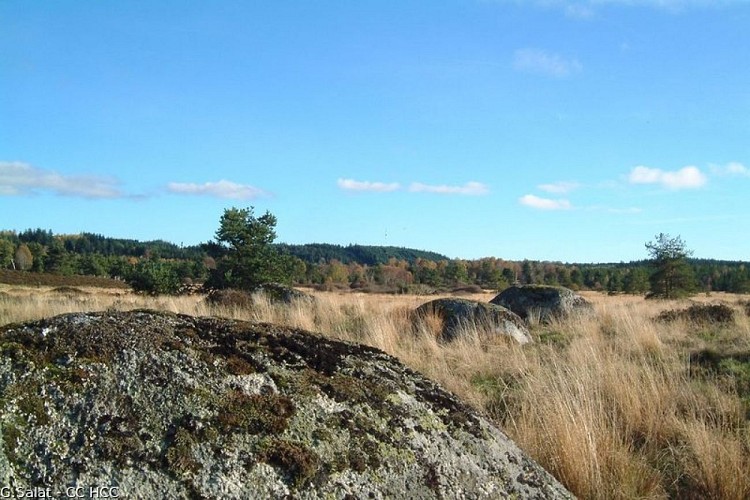
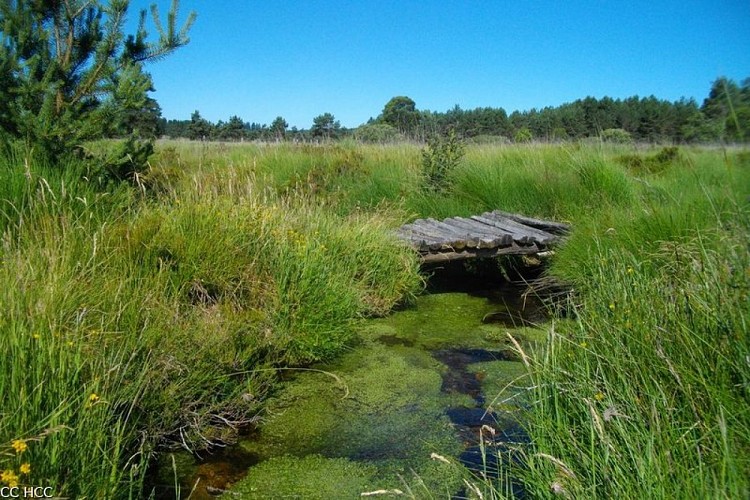
At the red gate, it is possible to enter the peat bog to see the "100 Stones" (go forward 100 m). Back at the gate, turn left. Cross the small stream to reach the fir plantation.
Cross the meadow on the left by going through the two barriers, then take a wooden bridge that crosses the Vézère. Take the left turn at the edge of the woods.
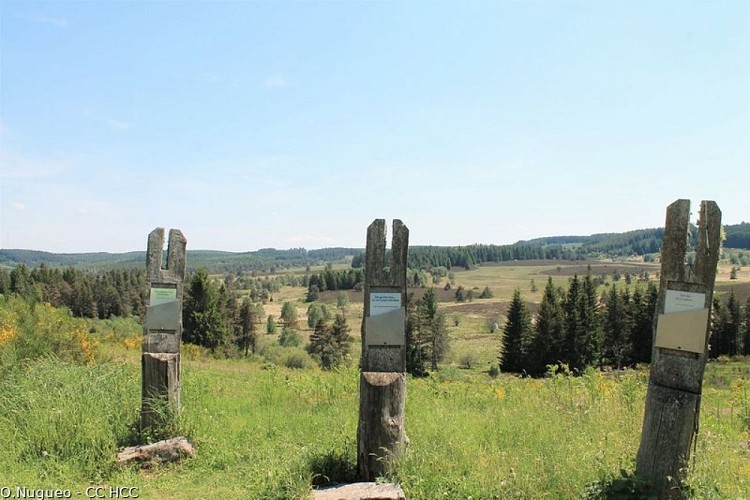
At the small road, turn left and follow it. It becomes a gravel track, continue until you reach the three educational information posts where you have to take the small path on the left signposted "return to the Longeyroux area". Cross the Vézère a second time.
At the crossroads, turn left, continue for 100 m to reach the road. Turn left and follow it until you reach the Longeyroux area.
Technical Information
Altimetric profile
Starting point
Points of interest
Additional information
Advice
Pick up the guide booklet to take with you - available at the tourist office. Waterproof footwear recommended. Be careful in foggy weather; there are few landmarks.
Is in the midst of the park
The national park is an unrestricted natural area but subjected to regulations which must be known by all visitors.
Advised parking
Longeyroux Reception area, Saint-Merd les Oussines Longeyroux Reception area, Saint-Merd les Oussines
Access
From Meymac take the D 36 and then the D 979 towards Bugeat. Head towards the village of Celle. At its cemetery, take the road on the right towards the Longeyroux area car park.
Arrival
Longeyroux reception area, Saint-Merd les Oussines
Ambiance
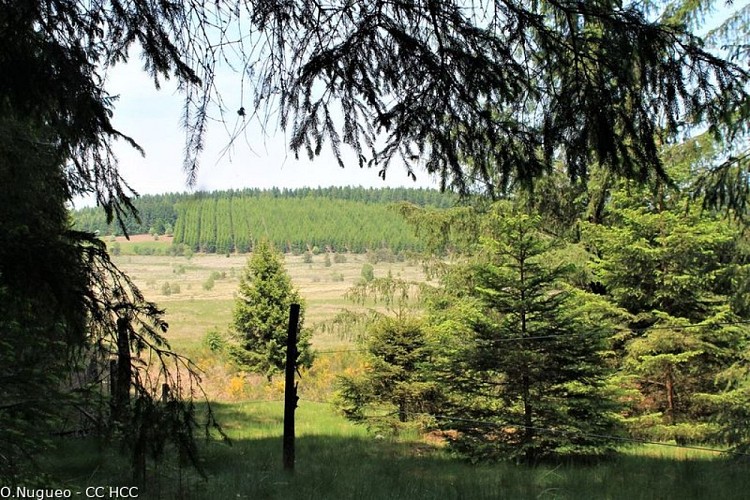
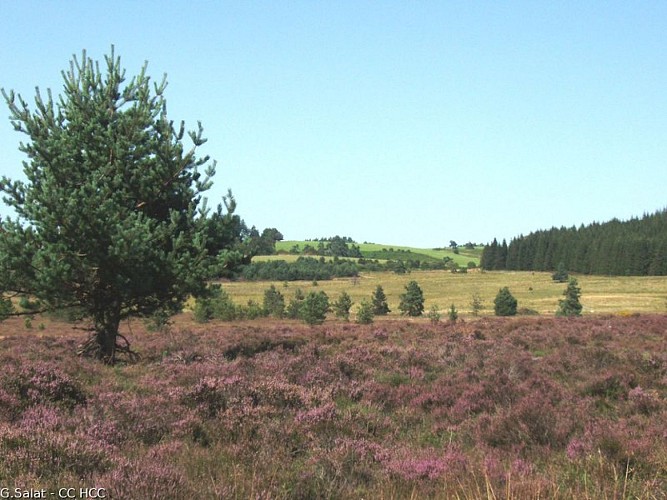
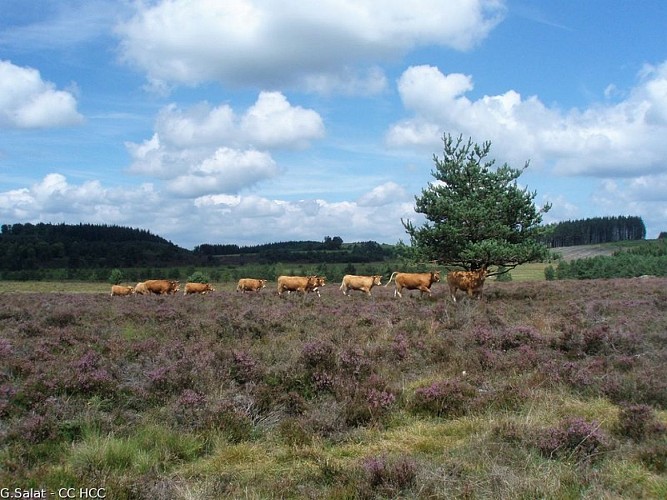
Look, listen, feel, smell: the peat bog is open to you! In the heart of the Millevaches plateau, this 8,000-year-old natural site is a calm place to pause for a while. A protected area of 255 hectares, this peat bog is full of distinctive fauna and flora. During the hike, you can admire these wetlands and the puys around them. By getting closer, you can also discover new species.
Departure
Longeyroux reception area, Saint-Merd les Oussines
Data author
