Alert

Alerts

To see around
See more
Open
Close
Show
Show
Show
Show
Show
Show
Show
Show
Show
Show
Show

Oups... It would appear that Cirkwi does not have permission to use your location.

Presentation
Description
Map
Points of interest
Ratings and reviews
See around

Hiking trail - Alpine pasture secrets

Hiking trail - Alpine pasture secrets
Hiking trail - Alpine pasture secrets_Onnion

Description

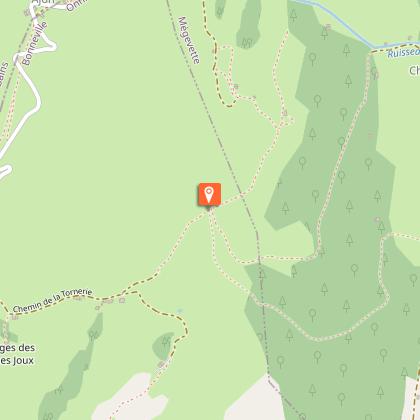
An easy walk to discover the sculptures of the Plaine-Joux Plateau, carved from monolithic blocks of marble limestone and arranged in a semicircle 100 meters apart from each others.

During the first Plaine-Joux Plateau Sculpture Symposium in July 2012, four sculptors traveled to the plateau to work on their masterpieces, chiseling, polishing, and bringing them to life... in monolithic blocks of marble limestone placed 100 meters apart from each others.

Roger Dunoyer's project:
He began his work on the first block, whose meteorite shape inevitably suggested to him the birth of the world. A shooting star and its light cross the surface of the block, ending up at the center of the earth to put down a human fetus.

Janpol's project:
Since it was discovered X million years ago in the Baré cave, Janpol worked on a rock with a cave cat skull where it lived during the Paleolithic era, and on the second rock, a few engravings (in relief) that lead us to this more recent ancestor, the Homo sapiens.

Isabelle Milleret's project:
Her work was to highlight the symbolism of a place like Plaine-Joux : to create a crossroads in the form of a star or intersection of lines. Eventually indicating the north-south and east-west axes (compass rose) or the location of the four surrounding municipalities (Bogève, Mégevette, Onnion, Villard).

Yann Narzabal's project:
His work consists of expressing the sedentarization and settlement of humans from ancient times to the present day : the era when humans acquired the knowledge and techniques to build their homes as we know them today in the traditional architecture of our region.

Carving a block of stone into a work of art, a phenomenal feat accomplished in a single day by these four sculptors !

Walkthrough available by clicking on the printer icon.

Technical Information

Walking
Difficulty
Very easy
Duration
1h
Dist.
2.5 km
Show more

Altimetric profile

Starting point

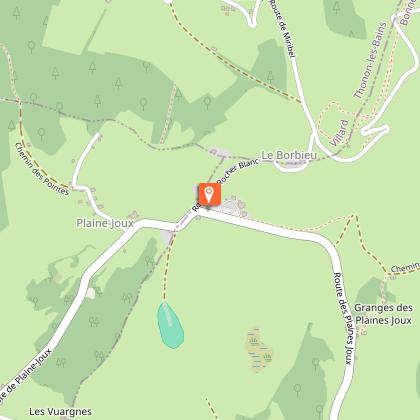
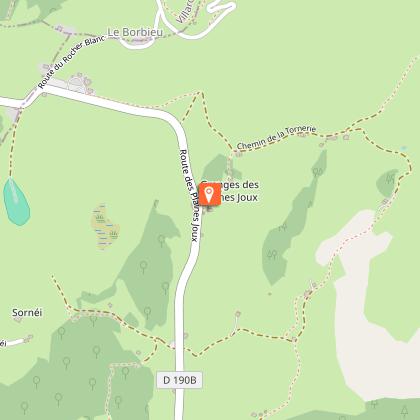
Plateau de Plaine-Joux , 74490   Onnion
Lat : 46.196723Lng : 6.468563

Points of interest

image du object

Sculpture symposium

You may be wondering what these stone blocks carved on the Plateau de Plaine Joux? It is in this green oasis, that took place the first sculpture symposium of Plaine-Joux plateau July 2012.During the first Plaine-Joux Plateau Sculpture Symposium in July 2012, four sculptors traveled to the plateau to work on their masterpieces, chiseling, polishing, and bringing them to life... in monolithic blocks of marble limestone placed 100 meters apart from each others. Roger Dunoyer's project: He began his work on the first block, whose meteorite shape inevitably suggested to him the birth of the world. A shooting star and its light cross the surface of the block, ending up at the center of the earth to put down a human fetus. Janpol's project: Since it was discovered X million years ago in the Baré cave, Janpol worked on a rock with a cave cat skull where it lived during the Paleolithic era, and on the second rock, a few engravings (in relief) that lead us to this more recent ancestor, the Homo sapiens. Isabelle Milleret's project: Her work was to highlight the symbolism of a place like Plaine-Joux : to create a crossroads in the form of a star or intersection of lines. Eventually indicating the north-south and east-west axes (compass rose) or the location of the four surrounding municipalities (Bogève, Mégevette, Onnion, Villard). Yann Narzabal's project: His work consists of expressing the sedentarization and settlement of humans from ancient times to the present day : the era when humans acquired the knowledge and techniques to build their homes as we know them today in the traditional architecture of our region. Carving a block of stone into a work of art, a phenomenal feat accomplished in a single day by these four sculptors !

Plateau de Plaine-Joux 74490 Onnion
- Môle et Brasses tourisme -
Consulter
image du object

Mount Vouan

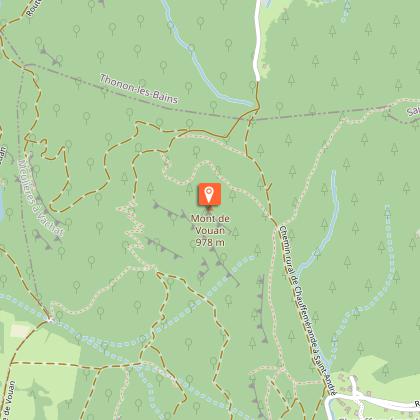
Mont Vouan is a small mountain range with an altitude of 978 metres. Located between Les Brasses and Les Voirons, it is part of the Chablais Pre-Alps.Its distinctive feature lies in the siliceous nature of its soil, which has enabled nearly 600 plant species (some of them rare) to grow there. Its fauna is equally diverse: more than 200 species have been recorded, including mammals, birds, reptiles, fish, amphibians and insects. Historically, the site is famous for its millstones, a place where millstones were extracted for use in grinding rye, barley and other grains into flour. A one-tonne millstone could produce several hundred kilos of flour every day. It should be remembered that our ancestors ate more than a kilo of bread a day ! In the past, a millstone was worth the price of a house, so places were highly sought after. While not everyone could afford to cut a millstone, finding a place to cut it was even more difficult! The extraction of a millstone took place as follows: The millstone was marked out on the wall and a groove was dug around it. Fir wedges were driven into the groove and regularly wetted. The swelling of the wood detached the millstone by breaking the stone. The millstone extraction site at Mont Vouan was extremely important, as it was one of the largest in south-eastern France, producing more than 200,000 millstones from 72 quarries. At the foot of the Vachat millstones quarry lies the Pierre aux Morts or ‘Gouille aux Morts’ marsh, which serves as a reminder of how difficult it was to cut millstones, as the stonecutters often took great risks. The pond was named after the fall of two stonecutters while they were working on a Sunday (the Lord's Day !). Mount Vouan was also crossed by a smugglers' path. The smugglers brought wheat from the Pont Morand mill to Geneva and returned with alcohol, tobacco and other goods. Today, you can still see large round holes nearly 2 metres high in the rock where the millstones were extracted. They are part of the ancient Meulières à Vachat and Grand'Gueule sites, which have been classified as a ‘Historic Monument’ since 2009 and a ‘Sensitive Natural Area’ since 2017. PAYSALP offers tours for groups throughout the year. Information and reservations: www.paysalp.fr

- Môle et Brasses tourisme -
Consulter

Additional information

Environments

Mountain view
Panoramic view
In the country
Isolated

Updated by

Môle et Brasses Tourisme - 26/11/2025
www.mole-brasses.com/fr
Report a problem

Open period

All year round daily.

Type of land

Stone
Ground
Grit

Animals

Yes

Data author

30 route des Brasses 74250 Viuz-en-Sallaz France

Ratings and reviews

To see around
See more
Open
Close
Show
Show
Show
Show
Show
Show
Show
Show
Show
Show
Show
Caution!
We have no information on the difficulty of this circuit. You may encounter some surprises along the way. Before you go, please feel free to inquire more and take all necessary precautions. Have a good trip! 🌳🥾