Warnung
Warnungen
Aubépine
Beschreibung
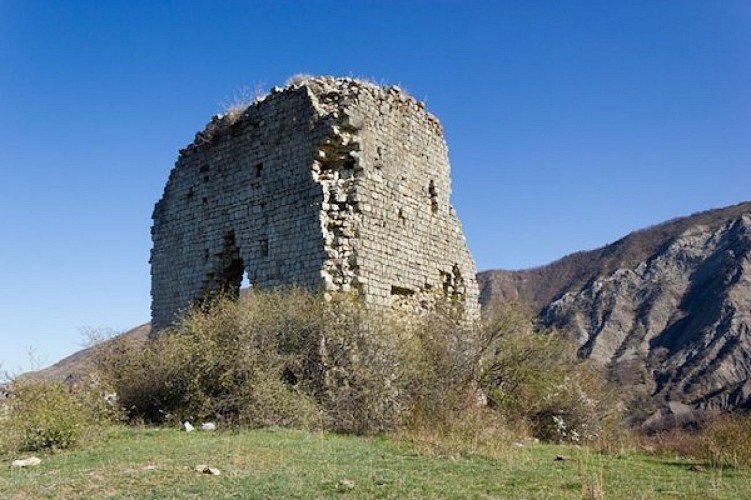
At the foot of the Melve Tower, an impassable barrier—all too often replaced in rural areas by barbed wire—stands before you. Among the various shrubs and small trees that make up this barrier, the hawthorn plays a prominent role. Derived from the Latin “alba” (white) and “spina” (thorn), it has white bark. A natural shelter or refuge for many birds and insects, the hawthorn has also been used by humans for medicinal and culinary purposes: its flowers, harvested in small bunches along with their young leaves, are used to make tea. It has a calming effect and appears to be effective against anxiety and insomnia. Its young leaves can be eaten raw in a salad, garnished with a few of its flowers. Its fruits, the hawthorns, rich in sugars, pectin, and vitamin C, can be mixed with flour to make pancakes, bread, and more. To do this, crush the hawthorns with your fingers into the flour to mix their pulp with it. Then sift to remove the pits, and use this colorful, fragrant flour just like any other flour. However, its pits contain cyanide and are therefore potentially toxic.
Technische Informationen
Höhenprofil
Datenautor
